
For many Australians starting CPAP therapy, the biggest concern isn’t the air pressure—it’s the feeling of being “closed in.” If your nightly ritual involves winding down with a novel, catching up on the news on your tablet, or simply wearing your glasses until the moment you drift off, a bulky traditional mask can feel like a major roadblock to your lifestyle.
The good news is that CPAP technology has evolved significantly. Modern minimalist CPAP masks are designed specifically for “visual freedom,” allowing for an unobstructed line of sight and a lightweight feel that combats claustrophobia. This guide explores the best options available in Australia for those who refuse to sacrifice their bedtime routine for their sleep health.
See more: How CPAP Therapy Can Improve Heart Health and Prevent Sleep Apnea Complications
What is a Minimalist CPAP Mask?
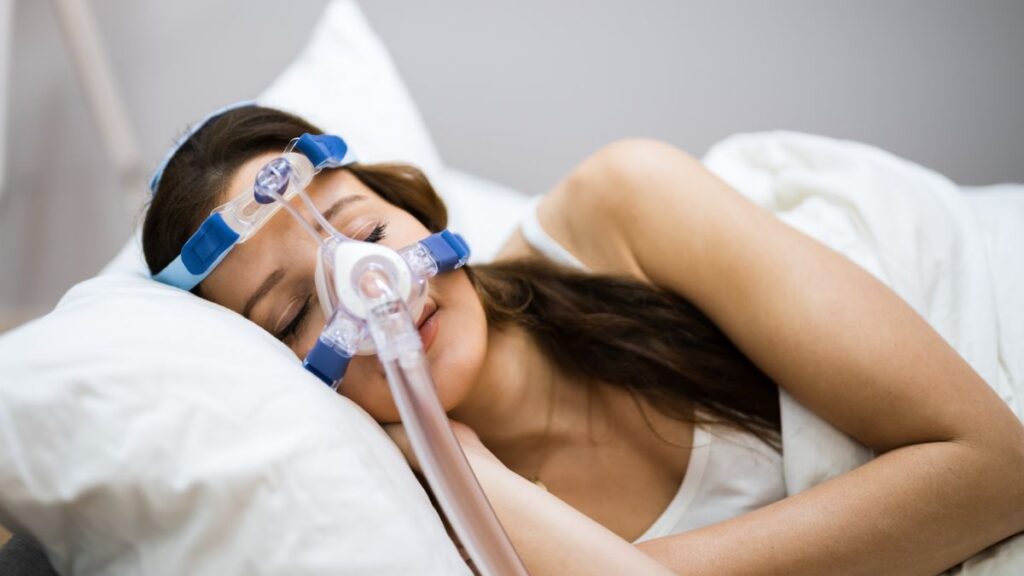
A minimalist CPAP mask is a low-profile interface designed to have the smallest possible footprint on the user’s face. Unlike traditional “nasal” or “full-face” masks that often feature a forehead support bar or large plastic frames that block the bridge of the nose, minimalist designs focus on clearing the field of vision.
Key Characteristics of Minimalist Designs:
- No Forehead Support: Eliminates the “T-bar” that traditionally sits between the eyes.
- Under-the-Nose Sealing: Uses nasal pillows or nasal cradles that sit at the base of the nostrils rather than over the bridge of the nose.
- Top-of-Head Tubing: Many models move the hose connection to the top of the head, removing the “elephant trunk” hanging from the face.
- Ultra-Lightweight Materials: Often weighing less than 50 grams, reducing pressure marks and skin irritation.
Why Visual Freedom Matters for CPAP Success
The “first-night effect” is a well-documented phenomenon in sleep medicine where patients struggle to adapt to therapy. For Australians who value their evening relaxation, a mask that blocks the eyes can create a psychological barrier to compliance.
Wearing glasses with CPAP is a specific challenge. Traditional masks sit exactly where your glasses need to rest. Minimalist masks solve this by leaving the bridge of the nose entirely free. This allows you to:
- Read in Bed: Maintain your cognitive wind-down routine without a plastic frame in your periphery.
- Wear Eyeglasses: The absence of a forehead bridge means your glasses sit naturally on your face.
- Reduce Claustrophobia: Seeing the room clearly helps the brain feel less “trapped,” which is vital for long-term therapy adherence.
Top Recommendations: Best Minimalist CPAP Masks in Australia
When selecting a mask for reading or wearing glasses, the “Under-the-Nose” (UTN) category is your best friend. Here are the top-rated models currently leading the Australian market.
1. ResMed AirFit P10 (Nasal Pillows)
Often cited as the “gold standard” for minimalism, the P10 is one of the quietest and lightest masks on the market.
- Best For: Minimalists who want the least amount of headgear possible.
- Why it works for glasses: The dual-wall nasal pillows and ultra-slim “QuickFit” elastic headgear leave the entire face open.
2. Philips DreamWear (Nasal or Silicone Pillows)
The DreamWear family revolutionized the industry with its “tube-at-the-top” design.
- Best For: Side sleepers and those who feel restricted by a front-facing hose.
- Why it works for glasses: Air flows through the soft silicone frame, leaving the bridge of your nose and your vision completely clear.
3. ResMed AirFit N30i (Nasal Cradle)
A “cradle” mask sits under the nose without being inserted into the nostrils.
- Best For: People who find nasal pillows (inserts) irritating but still want a low profile.
- Why it works for glasses: Like the DreamWear, the N30i features top-of-head tubing and an open-face design.
4. Fisher & Paykel Evora (Nasal)
The Evora features “CapFit” headgear, designed to be put on just like a baseball cap.
- Best For: Users who struggle with complex straps and want a stable, “one-click” fit.
- Why it works for glasses: Its compact seal sits comfortably below the nose, keeping the eye area open for reading.
Comparison Table: Minimalist Mask Features
| Mask Model | Type | Tubing Location | Field of Vision | Best Use Case |
| ResMed AirFit P10 | Nasal Pillows | Front | 100% Clear | Ultra-lightweight / Quiet |
| ResMed AirFit P30i | Nasal Pillows | Top of Head | 100% Clear | Active/Side Sleepers |
| Philips DreamWear | Nasal Cradle | Top of Head | 100% Clear | Maximum Freedom |
| F&P Evora | Nasal | Front | 95% Clear | Easy Fitting/Stability |
| ResMed AirFit F30 | Hybrid Full Face | Front | 90% Clear | Mouth Breathers |
How to Choose the Right Mask for Your Lifestyle
Choosing a mask isn’t just about the smallest size; it’s about matching your anatomy and habits. Follow this framework to find your perfect fit:
Step 1: Determine Your Breathing Style
If you breathe exclusively through your nose, Nasal Pillows (P10, P30i) are the ultimate minimalist choice. If you breathe through your mouth, you’ll need a Hybrid Full Face mask like the ResMed AirFit F30, which still sits under the nose to allow for glasses.
Step 2: Evaluate Your Sleep Position
- Active Sleepers: Choose a “Tube-at-the-top” model (N30i or DreamWear). This allows the hose to rotate 360 degrees as you flip from side to side.
- Back Sleepers: Front-facing hoses (P10) are often more than sufficient and slightly lighter.
Step 3: Test with Your Glasses
If possible, visit a CPAP clinic in Australia for a “fitting.” Bring your reading glasses. Put the mask on first, then slide your glasses over. If the mask pushes against the frames, it may cause leaks during the night or discomfort to the bridge of your nose.
Advanced Tips for CPAP Visual Freedom
- Use a CPAP Pillow: These pillows have cut-outs on the sides to prevent the mask from being “shoved” by your bedding, which is especially helpful for low-profile nasal pillows.
- Manage Your Hose: Use a hose lift or “hose hanger” if you choose a front-connect mask. This keeps the tubing from draping across your book or tablet.
- Nasal Dilators or Strips: If you feel you aren’t getting enough air through a minimalist nasal mask, a simple nasal strip can help keep your airways open, making the therapy feel less “heavy.”
Common Mistakes to Avoid
- Over-tightening the Straps: Minimalist masks rely on a “seal” rather than “pressure.” Tightening too much can actually collapse the cushion, causing leaks and red marks.
- Ignoring Mouth Leaks: If you use a minimalist nasal mask but wake up with a very dry mouth, your therapy air is escaping. You may need a chin strap or a hybrid mask.
- Skipping Regular Cleaning: Small masks have small vents. If these vents get clogged with skin oils, the mask becomes noisy and less effective.
Internal & External Resource Suggestions
- Internal Link Suggestion: “Guide to CPAP Humidification Settings for Australian Climates” (Anchor: humidification settings)
- Internal Link Suggestion: “Comparing Nasal Pillows vs. Nasal Cradle Masks” (Anchor: Nasal Pillows vs. Nasal Cradle)
- External Reference: The Sleep Health Foundation (Australia) – Search for their “CPAP Frequently Asked Questions” for clinical guidelines.
- External Reference: Thoracic Society of Australia and New Zealand (TSANZ) – Look for “Clinical Practice Guidelines for Sleep Apnea.”
Frequently Asked Questions (FAQ)
Can I really wear glasses with a CPAP mask?
Yes. By choosing a “minimalist” or “under-the-nose” mask, there is no plastic frame sitting on the bridge of your nose, allowing your glasses to sit in their natural position.
Which CPAP mask is best for claustrophobia?
Nasal pillow masks (like the ResMed AirFit P10) are typically best as they have the least amount of contact with the face and provide a completely open field of vision.
Do minimalist masks leak more than traditional masks?
Not necessarily. While they have a smaller surface area, modern “auto-sealing” technology ensures a secure fit. However, they are generally better suited for low-to-moderate pressure settings.
Are these masks available in Australia?
Yes, all major brands like ResMed, Philips, and Fisher & Paykel are widely available through Australian sleep clinics and online retailers.
Can I watch TV while wearing these masks?
Absolutely. Because these masks do not have a forehead support bar, your line of sight is completely unobstructed, making them ideal for watching TV or using a phone in bed.
Conclusion
Finding the best minimalist CPAP masks for people who wear glasses or read in bed is about reclaiming your evening. You don’t have to choose between your sleep health and your lifestyle. By opting for a low-profile, under-the-nose design, you can enjoy your favorite book or show while receiving the life-changing benefits of CPAP therapy.